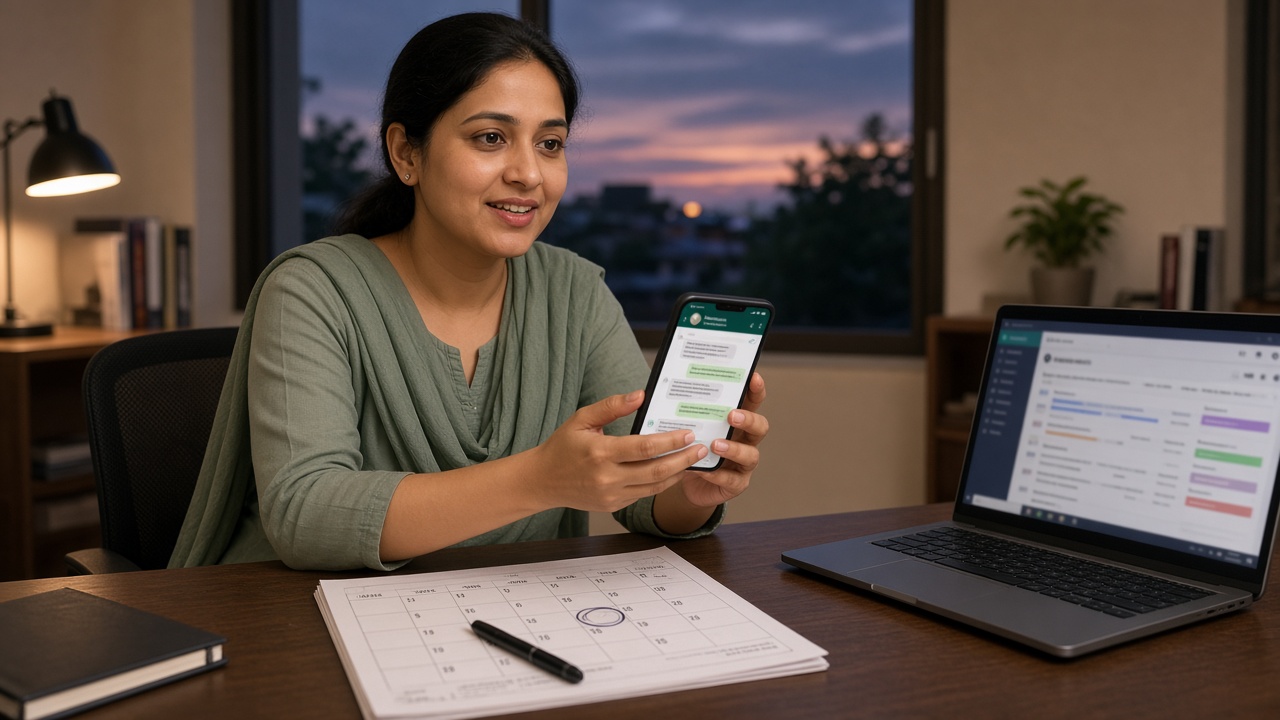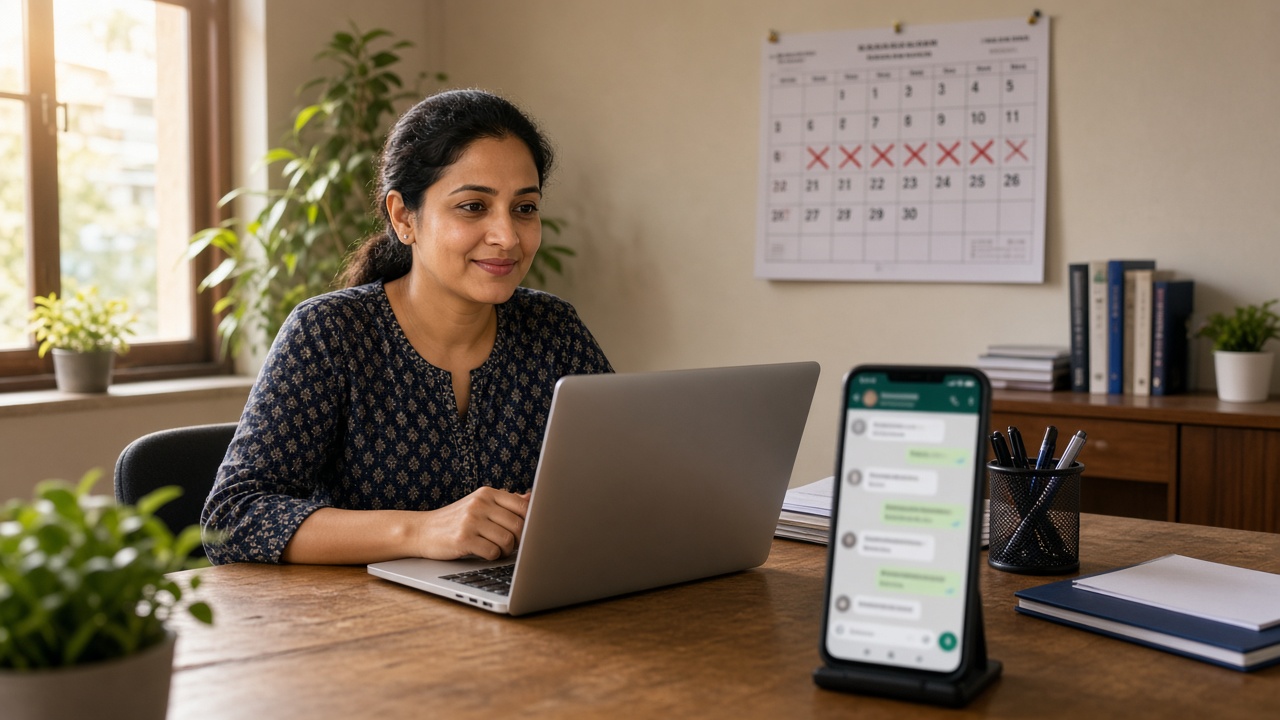
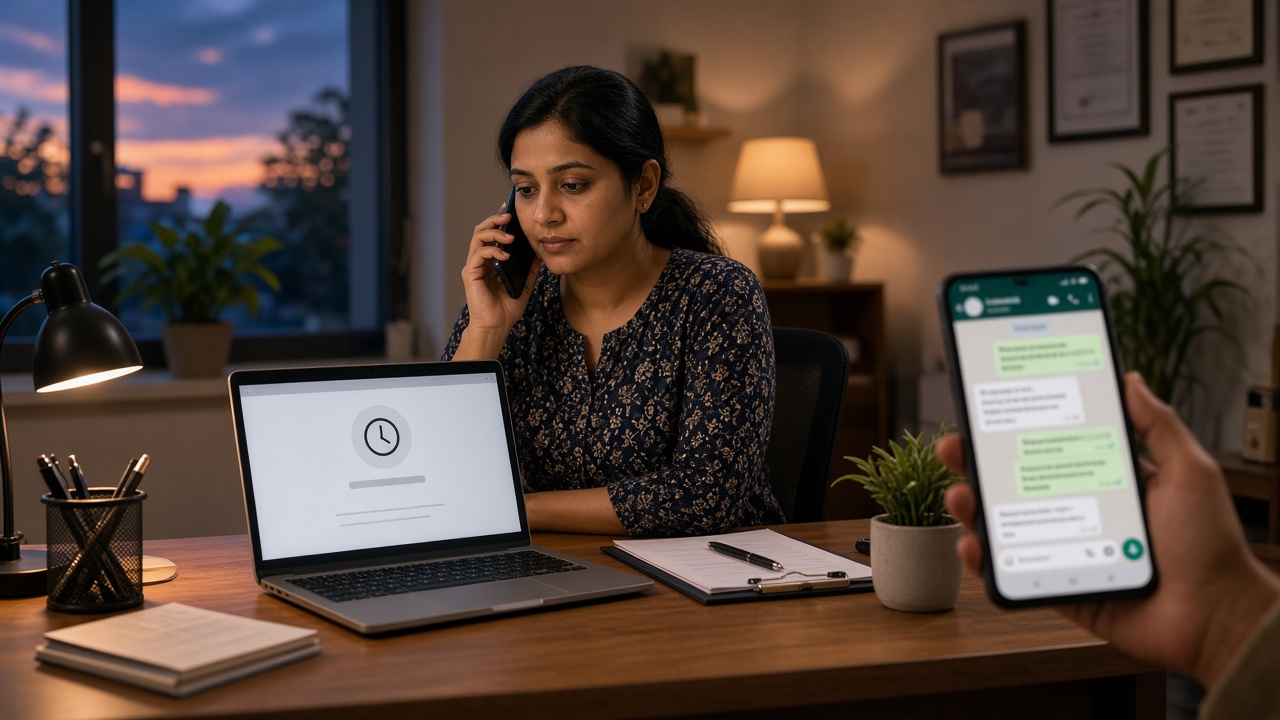
Token fee pending follow up for a coaching institute is the counsellor-owned window after a parent pays a registration or seat-hold amount but has not cleared the remaining admission fee by the date you both agreed. Most revenue leaks here are quiet: the CRM still shows fee discussed while the batch seat you mentally reserved is already offered to a walk-in who paid full fees on Friday.
Pattern we see in NEET and JEE peak weeks: parent transfers five thousand rupees on Tuesday night, counsellor marks interested, then sends a long fee PDF on Wednesday with no dated balance deadline. By Sunday the parent stops reading messages. Your desk counted one enrollment in the pipeline. Finance counted one token. The seat was never really held.
What should token fee pending follow up look like in the first 72 hours?
Start within two hours of token credit: confirm receipt on WhatsApp, name the exact balance, state the seat-hold expiry date in plain language, and send one payment link or bank detail block. Same-day, log a call if they read but do not pay. Day two is proof plus objection handling, not another brochure. Day three is manager review: extend hold with a written reason, collect the balance, or release the seat and mark lost with a code. Treat the clock from when the token hits your account, not from when someone updates the CRM on lunch break.
Token fee pending follow up coaching institute work is different from chasing a cold Meta lead. The family already voted with money. They need clarity on instalments, sibling discounts, hostel add-ons, and what happens if board results shift their start date. Swayam is admissions and coaching revenue ops CRM (not the government SWAYAM MOOC platform); teams use it to separate token received from fee paid, but the rhythm below works on a shared sheet if you enforce one column for hold expiry.
Why do coaching institutes lose seats after a token payment?
Three failure modes show up on almost every audit we run with branch managers. First, the hold date lives in the counsellor's head while the sheet says fee discussed. Second, balance reminders copy marketing language instead of naming rupees and dates. Third, no one owns the release decision, so ghost holds block real payers until batch start panic.
Parents compare on WhatsApp threads they can screenshot. If your competitor sends balance due, last date, and UPI link in one message after token, you are not negotiating on faculty quality anymore. You are negotiating on administrative trust. GrowEasy's 2026 coaching lead guide stresses that speed after interest matters; token payers are past interest. They are waiting for you to finish the paperwork.
Reddit threads on r/JEENEETards and r/education are full of payment confusion stories: money sent but not reflected, refunds delayed, counsellors unreachable after partial pay. You cannot fix every aggregator complaint, but you can make your desk the one that confirms amount, reference number, and next due date in writing within minutes.
72-hour token balance playbook (counsellor table)
Pin this table in your morning huddle. Adjust amounts to your institute policy; keep the hold expiry column visible.
| Window | Owner | Channel | Done when |
|---|---|---|---|
| 0 to 2 hours | Counsellor | Receipt screenshot, balance amount, hold expiry date, payment link sent | |
| Same day | Counsellor | Call | Spoken confirm of instalment plan; objection note logged |
| Day 2 | Counsellor | One proof point (batch start, faculty, result card) plus balance reminder | |
| Day 3 morning | Manager | Review | Extend hold with new date, collect balance, or release seat |
| After hold expiry | Ops | CRM | Lost reason logged; seat offered to next waitlist row |
Between messages, keep notes short: token reference, promised balance, who decided (parent or student), and whether hostel or transport fees are still open. Managers should read the three oldest pending-balance rows aloud before anyone dials fresh enquiry lists. A family that paid token on Monday is warmer than a cold form on Tuesday if you close the balance before lunch on Wednesday.
How should managers audit token holds each week?
Pull every row where token received is yes and fee paid is no. Sort by hold expiry ascending. For each name, ask one question: is there a future-dated next step or are we hoping they remember us?
Split instalment plans from full-balance deals. An instalment plan needs the next slice date, not vague fee discussion. Full-balance deals need the hold expiry in the same message as the thank-you for token. Campaign-style nudges without dates train parents to ignore you until batch start.
When Meta CPL is rising but enrollments flat, token pending lists often hide the truth. Marketing sees form fills. Finance sees tokens. Only a merged view shows how many seats are soft-blocked without a dated follow-up. That merged view is what a weekly admissions review is for.
What do you say on WhatsApp without sounding pushy?
Use three templates max, edited by hand. Template one after token: thank you, confirm amount received, state balance and hold date, attach link. Template two on day two: one sentence on why families choose your batch plus balance reminder. Template three on expiry minus one day: seat releases tomorrow unless they reply with payment time or a specific blocker.
Stop blasting fee PDFs. Parents who paid token already saw fees. They need decision help: scholarship test date, refund policy if results change, or parent call with your academic head. Offer a ten-minute call slot instead of another document.
When should you release a seat after a token?
Release when hold expiry passes with no written extension, when a full-fee walk-in needs the last seat, or when the parent asks for refund per your policy. Do not release silently. Send one message naming the released date and invite them to rejoin waitlist if plans change. Ghosting after taking token is how institutes end up in social media complaint threads.
If your policy allows token adjustment toward balance, say so once with numbers. If refunds take fourteen working days, say that once too. Ambiguity here costs more than a small discount would have.
How long should you hold a seat after a token payment?
Most classroom batches use forty-eight to seventy-two hours for the first balance tranche after token, unless you sell a formal instalment schedule with signed dates. Shorter holds force discipline on your desk. Longer holds without signed plans become imaginary inventory. Write the expiry in the first thank-you message and mirror it on the CRM next-step field.
Should token payers get a different counsellor than enquiry leads?
Keep the same owner when possible. They heard the fee story first. Handoffs after token are where details get lost. If the owner is on leave, a second counsellor must read the call notes before messaging, not restart qualification from zero.
What CRM fields matter for token fee pending rows?
At minimum: token amount, token date, payment reference, balance due, hold expiry, instalment flag, next payment date, and lost reason if released. Without hold expiry, weekly reviews cannot sort risk. Without reference numbers, finance arguments eat counsellor time.
Does WhatsApp or phone work better for balance collection?
WhatsApp carries receipt, link, and written dates. Phone closes objections on scholarships, hostel, and parent approval. Use WhatsApp first for facts, then call the same evening if they read and stay silent. Two channels beat six duplicate WhatsApp forwards.
Where to tighten the rest of your admissions desk
Token recovery sits between post-call discipline and weekly pipeline hygiene. If your team already runs structured WhatsApp after counselling calls and a Monday review of fee-quoted rows, plug this hold table between those two rhythms. When you want one view of token versus paid versus lost, see Swayam pricing for admissions CRM built for Indian coaching desks. Useful cluster reads: weekly admissions review script, 48-hour enquiry follow up, and post-call WhatsApp follow up.